.png)
Does Your Dog Think Their Name Is "No"? (Shifting from "Stop doing that" to "Try this instead")


We often expect our dogs to be expert English learners, picking up on our words, our routines, and our moods. But when it comes to the word "No," we are often speaking a completely different language.
Now, a single, clear "No" has its place in training. If it isn't overused, a well-timed vocal interrupter can successfully pause an unwanted behavior in its tracks. But the breakdown happens when "No" becomes our primary training tool rather than an occasional interruption.
When you tell your dog to "sit," they know their butt is on the ground. But as a regular cue, "no" is a moving target. It means stop barking, get off the couch, stop begging, and don't chew that shoe.
Because the word gets used in so many different contexts without a specific, clear action attached to it, dogs naturally learn to ignore the word. It becomes background noise. If you have been wondering why your dog seems to be ignoring your "no," this is the likely reason. Effective communication with your dog requires consistency. The biggest problem with "no" is that it doesn't give your dog an alternative path to success.
So Instead of "No," What?
The most effective way to have a dog stop doing something you do not like is to give them something to do that you do like.
Rather than jumping, they can sit or lie down. Rather than barking at the window, they can be redirected to a different activity.
Some basic behaviors I love to use for redirection are "touch" (touching their nose to your hand) and "look" (making eye contact). Often, getting the dog to focus on you will keep them from focusing on whatever is causing them to bark.
Another technique is asking the dog to perform an incompatible behavior. These are actions in direct opposition to the problem behavior. A dog cannot easily jump while they are sitting or lying flat on the floor.
Teaching Rock-Solid Behaviors
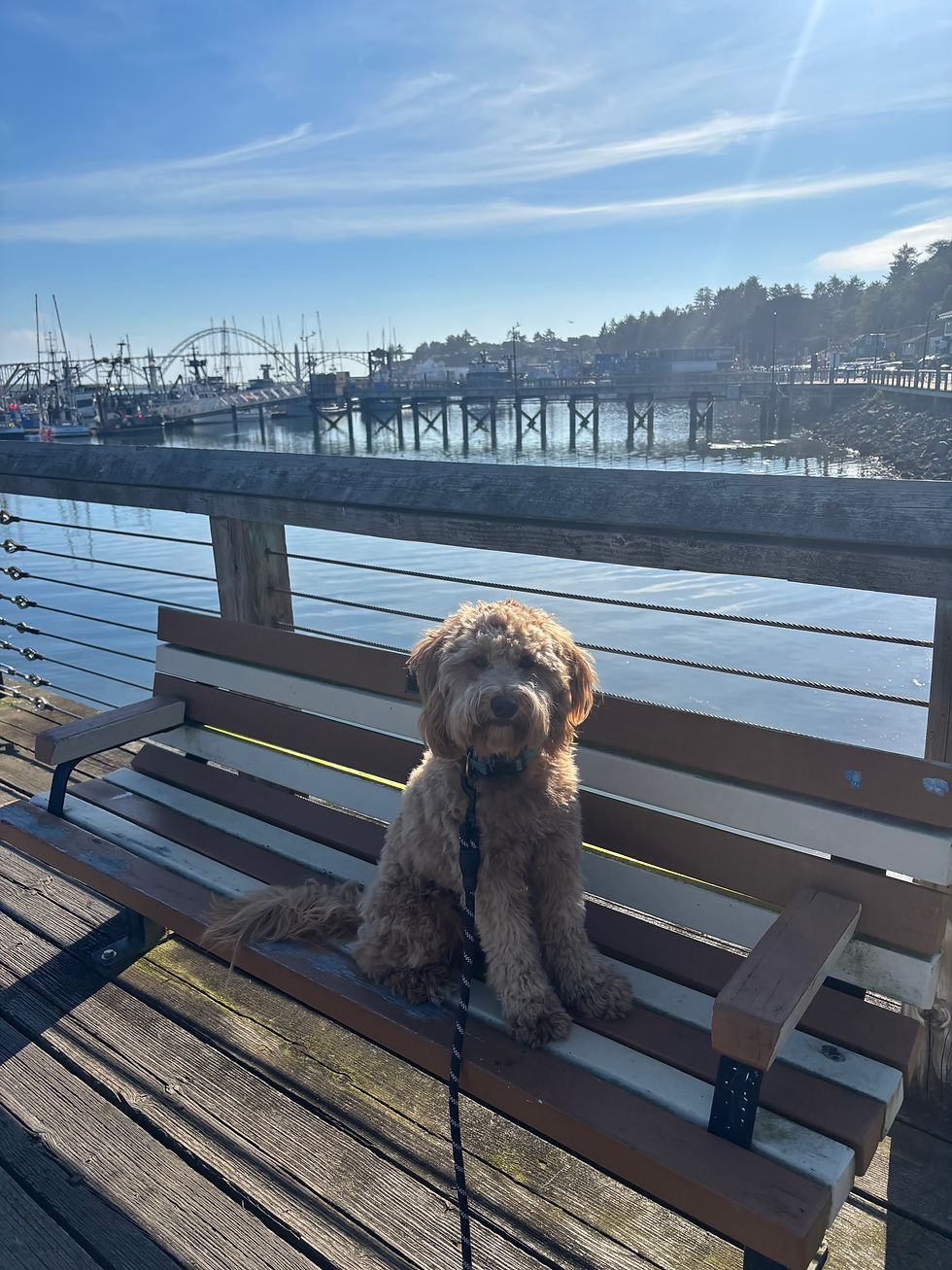
I like to have a few behaviors that are rock solid. For me, that means my pup Ozzie responds immediately better than 95% of the time. Our top three are Sit, Down, and Touch.
Developing a rock-solid response takes time and involves incorporating the "Three Ds" into your training: Distance, Duration, and Distraction.
The goal is to only introduce one "D" at a time. When you start working on a new one, you usually need to pull back on the others. Let’s look at a quick example with Sit:
The Baseline: You practice sitting in the quiet dining room, facing your dog from a foot or two away.
Adding Distance: Once your dog is highly successful, you take one step back. You are now asking for a sit from three feet away instead of two.
Adding Duration: Next, you practice having your dog hold the sit for ten seconds instead of five.
Adding Distraction: Asking your dog to sit while you are sitting in a chair, or practicing in a new room or location, adds distraction.
Once you take this training out into the real world where big distractions live, you will need to lower your expectations temporarily. Go back to standing just two feet away and ask for a short, simple five-second sit.
Managing the Present While Training the Future
I can hear you say, "Wow, that sounds like a lot of steps just to get a reliable sit." Yes, it takes time! So, what do you do in the meantime when the doorbell rings? You use environmental management.
Management means using tools or routines to keep everyone safe and successful while the training is still under construction. This depends entirely on the dog:
For a large rescue dog with an unknown history who loves to jump, you might use two degrees of safety. This could mean keeping the dog behind a closed door with a baby gate in the hallway. If they slip past the door, the gate still keeps everyone safe.
For a dog who is just a little too excited to greet guests but settles down quickly, simply putting them on a leash before visitors arrive might be all you need.
Just remember that management should never feel like a punishment to the dog, otherwise it can stall their learning. Instead, give them a stuffed Kong, a meaty bone, or a special puzzle toy they only get during these times. The goal of management is safety and preventing your dog from practicing the behaviors you want to stop.
We Are Human
We are human, and that means we are not perfect. If you find yourself repeating a frustrated "no, no, no, NO!!!", take a deep breath.
Whether you used a well-timed single "No" to pause your dog, or accidentally let a string of frustrated words slip out, treat that moment as a clean reset. Take a breath, and instantly give your dog some direction. Often, just tossing a few treats on the floor to scatter-feed or asking for an easy, familiar "touch" is all it takes to shift their focus and get you both back on track to success.
The Takeaway
Training isn't about silencing your dog or stopping them in their tracks; it’s about guiding them. The next time your dog is doing something that pushes your buttons, try to pause for a second. Shift your mindset from "How do I stop this?" to "What can I ask them to do instead?"
Once you start changing the question, you’ll find that you both start enjoying the answers a whole lot more.


Comments