.png)
Your Dog's Superpower


Ever feel like your dog seems happy when you are happy, notices and gently snuggles when you are sad, and leaves the room or cowers if you are angry? If you are a dog lover it might not surprise you to hear that dogs are really good at interpreting human emotion and picking up on our cues. While primates outperform dogs in almost every cognitive test, dogs have a superpower of reading us.
Researcher Brian Hare at Duke University was studying how well chimpanzees could read human gestures like pointing. But it was his dog at home that made him stop and think, his dog could do easily what chimpanzees failed at. That observation led to a fascinating discovery: dogs outperform chimpanzees at reading human social cues. Even young puppies, with no training, can follow a pointed finger or a person's gaze to find a hidden treat. Wolves can't do this reliably either, even when raised by humans, which tells us this ability didn't come from dogs' wild ancestry. It co-evolved with us over thousands of years of domestication.
But it goes much deeper than just pointing. Your dog is constantly reading your body language, facial expressions, posture, and breath. We are always broadcasting to our dog, even if we don't mean to. My lab, Willow, and I were enrolled in Canine Good Citizenship classes, and she was rocking every aspect except meeting a friendly stranger. When the "stranger" approached, Willow would tense up and bark if they got within about two feet of me. The trainer suggested I relax, take the tension off the leash, kneel down to her level, pet her gently, and say "friend." It worked like a charm. But it wasn't the word "friend" — it was me, no longer broadcasting my anxiety. I had been sending Willow a danger signal without realizing it, and she did exactly what she was supposed to do. (Worth noting: this applies to everyday nerves and tension. If your dog has a history of reactivity or aggression, that's a different conversation and a good reason to work with a professional trainer.)
Similar moments play out on walks every day. We decide to let our dogs meet. "She's friendly!" we say, but we hold the leashes tight, the tension runs straight down to the dog, and we steer them into a face-to-face greeting rather than the nose-to-butt hello dogs actually prefer. Suddenly, the friendly dog doesn't seem so friendly. The dogs were fine. We got in the way.
What this also means is that we are always training our dog, even when we don't mean to. Because dogs are such keen observers, we can accidentally create behaviors we never intended. This leads to the famous "guilty dog" look. Guilty dog memes make great social media content, but as we explored in a previous post, dogs don't have the cognitive wiring for true guilt. What they do have is a finely tuned ability to read us. Dogs have excellent associative memory. They are masters at connecting a cue to an outcome (think "sit" and your dog's bottom hits the floor), but they don't replay events the way we do. If you come home and react with frustration to a pillow shredded three hours ago, your dog isn't connecting your mood to what they did. They're connecting it to you walking in the door. Do that enough times, and you've trained them to offer appeasement signals the moment you arrive — not out of guilt, but out of pattern recognition.
We expect our dogs to become expert ESL (English as a Second Language) learners, picking up our words, our routines, our moods. And dogs are remarkably good at it, but here's where we often get tripped up. Just because your dog learned "sit" doesn't mean they speak English. They learned that a specific sound, in a specific context, with a specific person, predicts a specific outcome. Change one of those variables, and you may need to start over. Ever wonder why your dog sits perfectly at home but looks at you blankly at the park? That's not stubbornness — that's a dog who learned a cue in one context and hasn't generalized it yet. With more patience on our part and a willingness to learn their language in return, we might be surprised how much smoother our relationship with our dog becomes.
That dog who curls up next to you when you're sad? They didn't need you to say a word. They read it in your shoulders, your breath, your stillness. That's a relationship built on a language most of us didn't even know we were speaking.
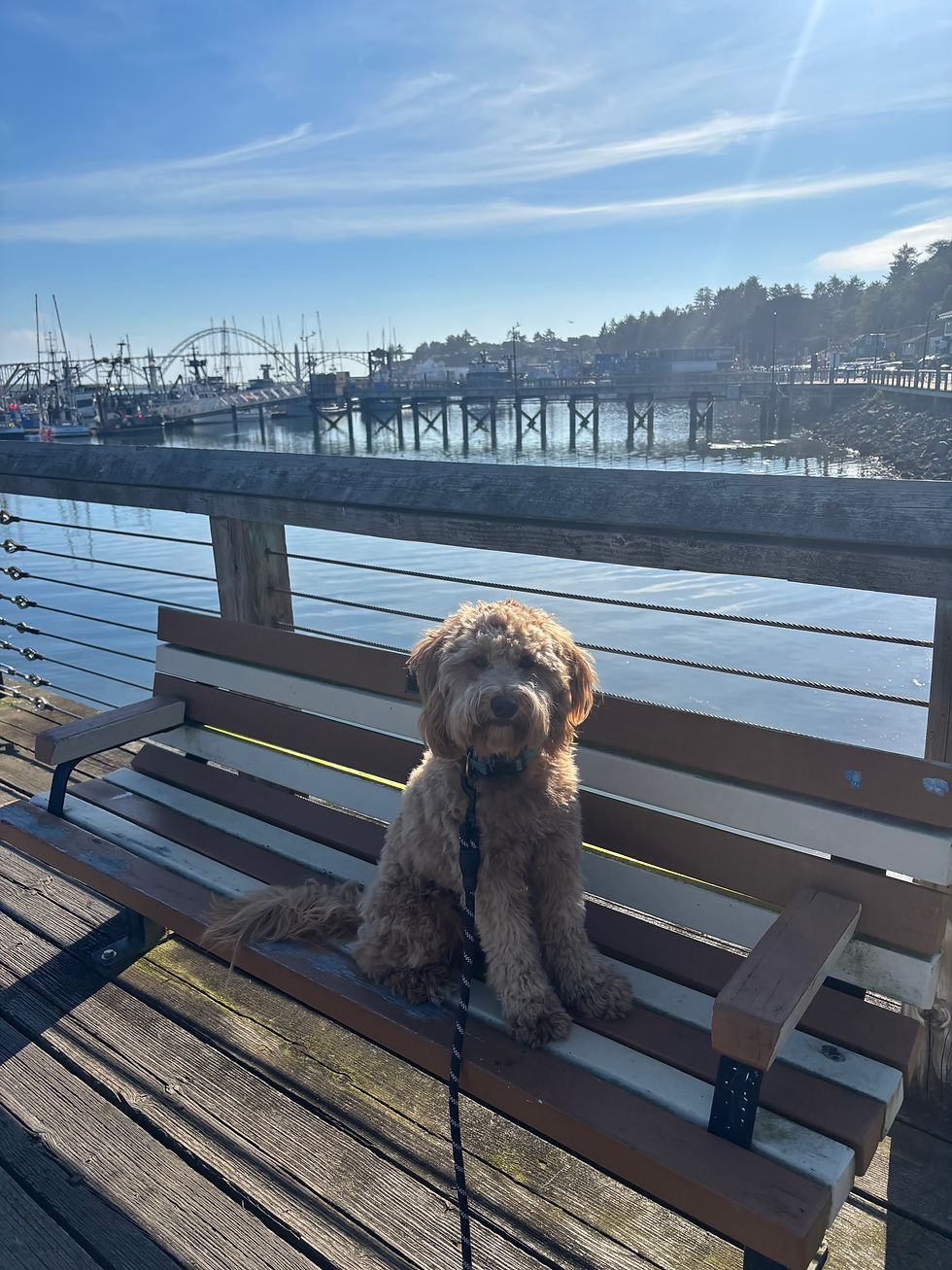
Photo Credit: AI artwork by Mark Culley — because Ozzie's superpower deserved a cape. ✨


Comments